What happens on the mountain pastures between summer and autumn?
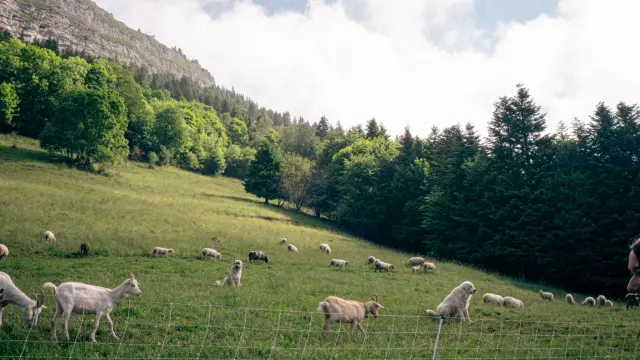
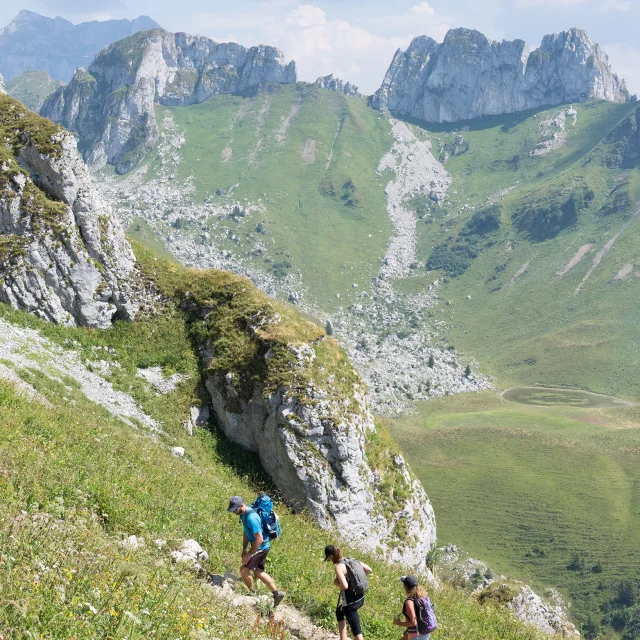
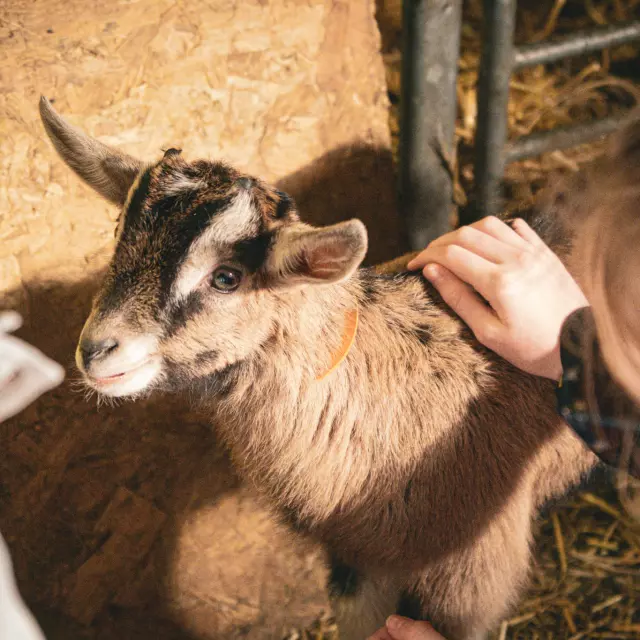
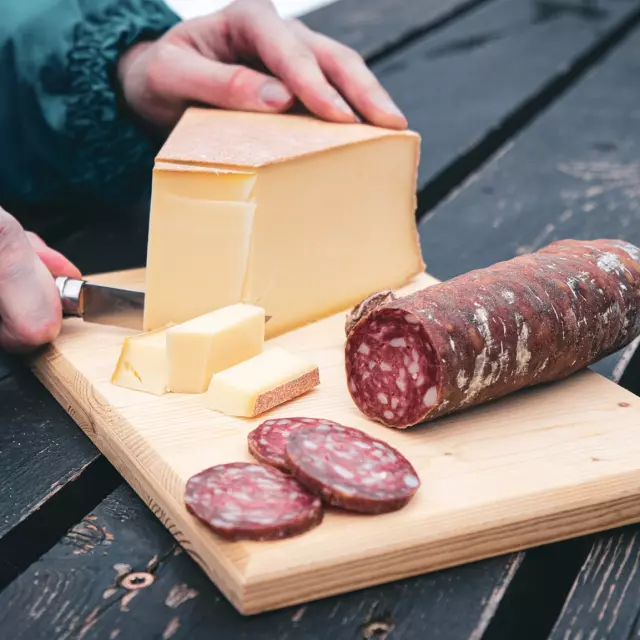
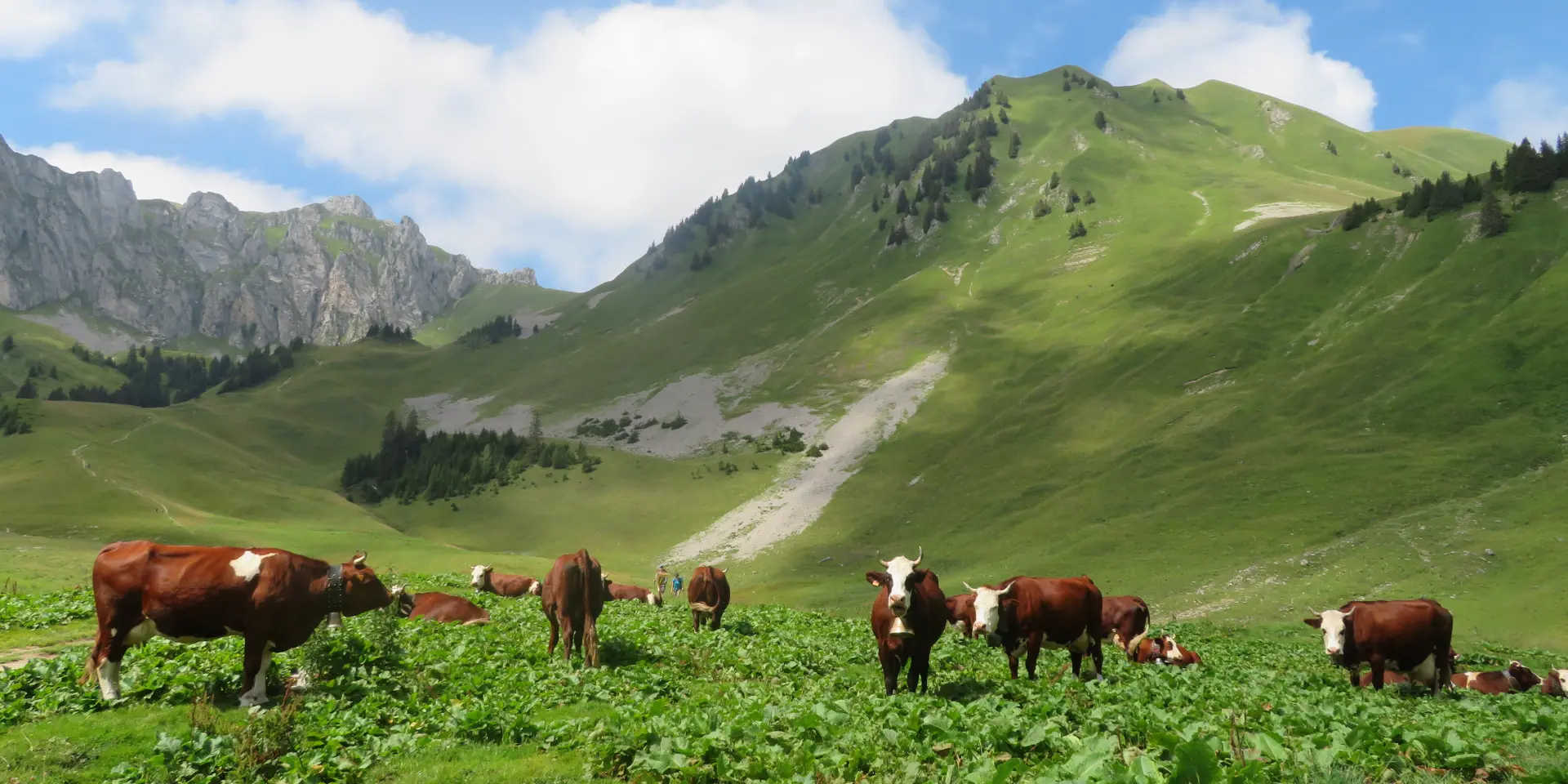
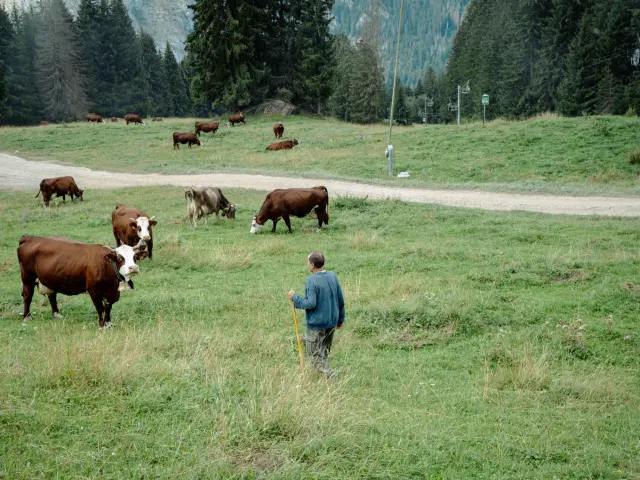
In June, the cows, sheep and goats “emmontagnent”; in other words, they return to their high-altitude pastures (between 600 m and 2900 m) to enjoy the fresh mountain grass, before coming back down in autumn to take shelter in the farms “down below” before the first snowflakes fall. In summer, the ‘belle saison’ as we say here, the sun-drenched, flower-filled alpine pastures are providential, as is the production of the milk (in summer it’s fragrant) used to make the Abondance, goat’s and ewe’s PDO cheeses you can enjoy here. The Alpine pastures are even better, to the sound of the clarines (bells) from the panoramic view; and meeting the producers is a delight. You’re sure to bump into them along the way.
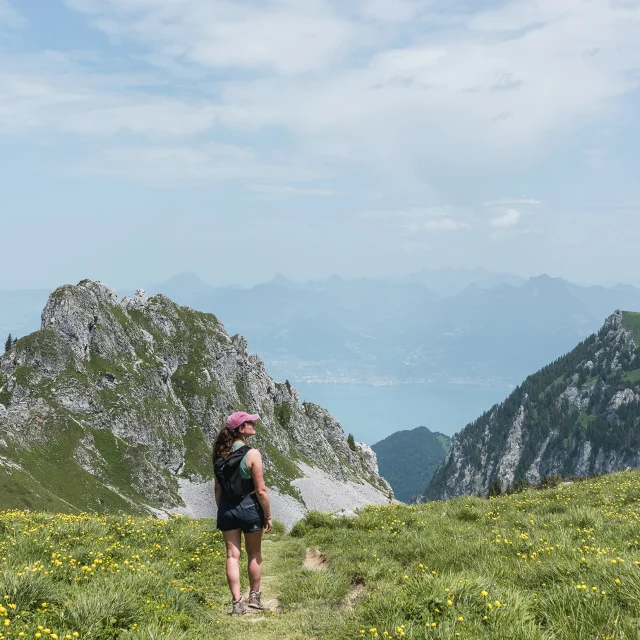
It’s good to be able to coexist in this production area, where mountain farmers and shepherds work side by side with unlimited hiking trails. If the mountain pastures are open, they are also protected natural environments to be respected.
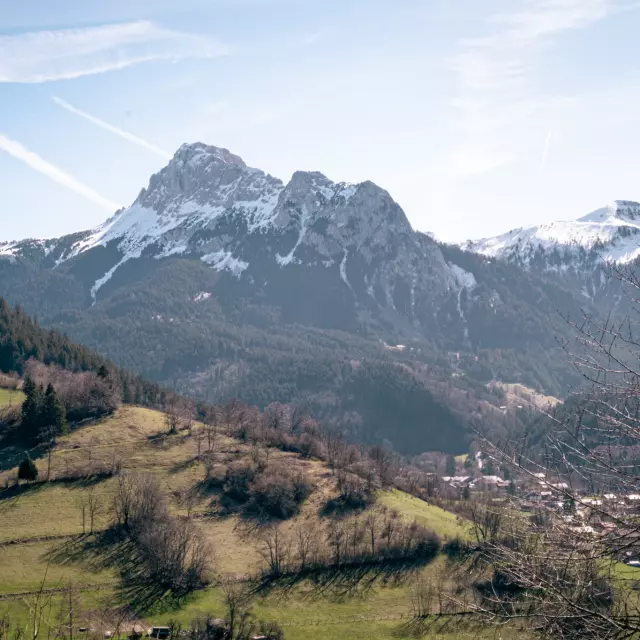
The mountain pastures of Ubine, Muret, Raille, Bise, Trépertuis, Oche and Pré-Richard offer unspoilt landscapes where pastoral traditions and nature meet in harmony.
Good to know about the Alpages :
- A fragile ecosystem: Alpine pastures are natural areas that must be respected by all visitors.
- A living tradition: Transhumance perpetuates ancestral know-how and helps to preserve mountain landscapes.
- Exceptional products: PDO cheeses, artisanal dairy products and other local specialities are the result of the work of the mountain pastoralists.
- A meeting place: Hikers and producers live side by side on this high altitude land, offering an authentic and immersive experience.
In 2023, transhumance was included on UNESCO’s Representative List of the Intangible Cultural Heritage of Humanity.